Is Wamoni Legit? Here Is the Honest Truth
Wamoni has been spreading rapidly across Facebook, WhatsApp groups, and Telegram channels in Nigeria, with people posting screenshots of balances as high as ₦14,000 and captions like “Register with ₦100 and earn ₦700 daily” and “I just cashed out ₦2,400.” The interface looks clean and professional. The payment proofs look convincing.
But is Wamoni actually legit? Can you really earn and withdraw money? And is that ₦100 activation fee safe?
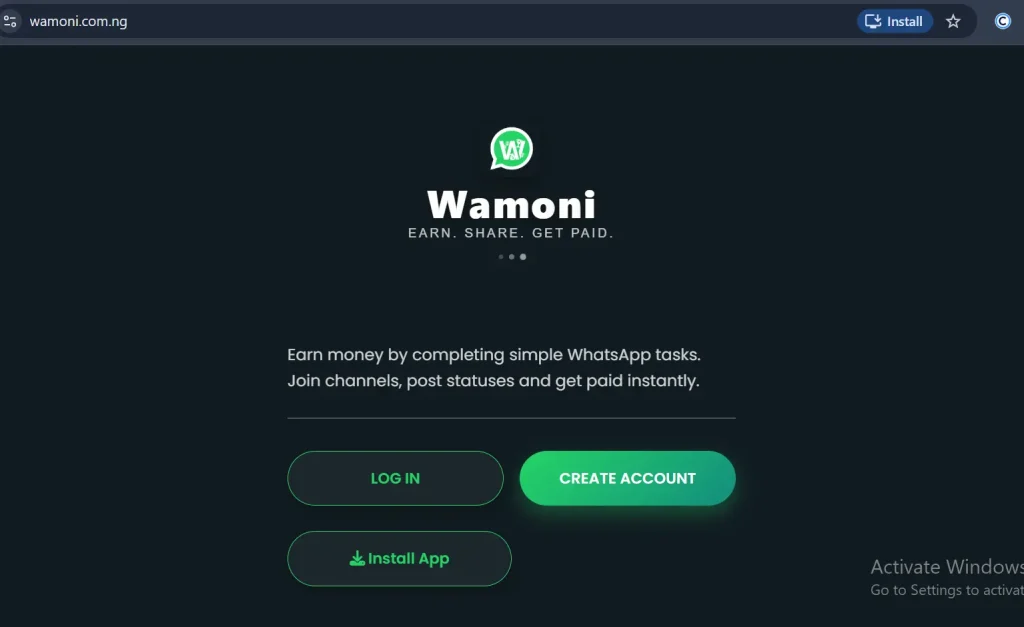
Here is the full picture.
What Is Wamoni?
Wamoni presents itself as an online earning platform where users make money by completing simple WhatsApp tasks. Its homepage slogan is “Earn. Share. Get Paid,” and it promises users can:
- Join WhatsApp and Telegram channels for pay
- Post statuses for commissions
- Refer friends for income
- Earn daily from task completions
The platform targets everyday Nigerians looking for a simple way to earn extra income from their phones, using familiar platforms like WhatsApp to make the concept feel accessible and trustworthy.
How Wamoni Works
After registering, users land on a dashboard that displays a wallet balance, task earnings, invite earnings, and their current account tier. The steps to start earning are:
Step 1: Pay a ₦100 activation fee. The platform frames this as a confirmation that “you are not a robot” and promises it unlocks daily task earnings, withdrawal access, and referral commissions.
Step 2: Complete daily tasks. Users receive a limited number of tasks per day, mostly joining WhatsApp groups, posting statuses, and sharing links.
Step 3: Refer others. The referral programme is where the real money allegedly comes from. Dashboard screenshots show invite earnings of ₦15,000 versus task earnings of only ₦1,167. That gap says everything about where this platform’s real focus lies.
Step 4: Withdraw. Users can request withdrawal once they meet minimum thresholds, with payments sent to bank accounts.
Is Wamoni Legit? The Honest Breakdown
After going through the platform’s pages, dashboard, payment system, and the social media promotion around it, the conclusion is straightforward: Wamoni shows the defining characteristics of a Ponzi-style referral scheme, not a legitimate task platform.
Here is the evidence.
The ₦100 Payment Is Sent Directly to a Person
This is one of the most alarming discoveries from the investigation. When you pay your ₦100 activation fee, you are not going through Paystack, Flutterwave, or any automated payment processor. You are asked to manually transfer the money to a Paga account listed under the name “Ami Ca (WAMONI)” and then click “I’ve transferred, Verify Payment.”
Sending money directly to a personal account with no automated system and no receipt trail is not how legitimate platforms handle payments. It is how individuals collect money with no accountability.
The Tasks Do Not Generate Real Revenue
Joining a WhatsApp group, posting a status, and sharing a link are not tasks that any real advertiser or company pays ₦700 per day to have done. That is not how digital advertising or influencer marketing works. Brands that pay for WhatsApp promotion spend far less per action and only work with verified, trackable systems, not anonymous users joining random groups.
If the tasks do not generate real revenue, only one question matters: where is the money coming from? The answer is new users paying the activation fee and upgrading to higher tiers.
The Referral System Carries the Whole Platform
The dashboard data makes it clear. One reviewed account showed ₦15,000 in invite earnings versus ₦1,167 in task earnings. That ratio is not a coincidence. It reveals that Wamoni’s true income model for users is recruitment, not task completion.
Early participants who recruit many people can genuinely earn from the referral chain. But this only works as long as new users keep joining and paying. When recruitment slows, payouts slow with it. The people who join late and cannot recruit are the ones left with nothing.
No Company, No CEO, No Registration
A thorough search of Wamoni’s platform and available information turns up no company name, no registered business, no CEO or founder identity, and no office address. When users have asked who owns the platform, the only answer given has been “it is owned by a Naija company,” with no further details.
This is not transparency. It is anonymity by design. Legitimate platforms are not afraid to say who they are.
The Tier Upgrade System Is a Further Trap
Beyond the ₦100 entry fee, Wamoni uses a tier-based upgrade system where higher tiers unlock bigger daily earnings. This means there is a built-in incentive for users to keep spending more money to unlock better returns, a structure that mirrors how VIP-tier Ponzi platforms extract maximum deposits before collapsing.
What About the Withdrawal Screenshots?
The withdrawal history screenshots circulating on social media show small payouts like ₦2,400 and ₦1,900 marked as successful. These are real for the people who received them, mostly early users and active recruiters.
But early payouts are how all Ponzi-style platforms build credibility. Paying ₦2,400 to ten people costs ₦24,000, easily covered by 240 new users paying ₦100 each. Those early success stories then fuel the social media promotion that pulls in the next wave of users.
The question is not whether anyone has been paid. It is whether the platform can sustain payouts as recruitment slows and whether users who cannot recruit will ever see meaningful earnings. Based on the structure of Wamoni, the answer to both is no.
Red Flags at a Glance
You must pay before you can earn anything, with the money going directly to a personal account.
The platform has no verifiable company registration, CEO, or business identity.
Tasks like joining WhatsApp groups and posting statuses do not generate real advertiser revenue at the rates Wamoni claims.
Most earnings come from referrals, not tasks, making the platform dependent on constant recruitment.
The tier upgrade system encourages users to spend more money for bigger returns.
There is no secure payment processor involved in any transaction.
Social media promotion is almost entirely done by people with a financial stake in recruiting you.
What Should You Do If You Have Already Paid?
If you have already paid the ₦100 activation fee, the direct advice is: do not upgrade to a higher tier and do not continue recruiting others into the platform.
Try to withdraw whatever balance you have accumulated. If withdrawals are delayed or denied, document everything with screenshots. You can report the platform to the EFCC at efcc.gov.ng or the SEC Nigeria at sec.gov.ng.
The ₦100 itself is a small amount, and many people will write it off. But the bigger risk is spending significant time recruiting friends and family into a platform that will eventually stop paying, damaging both your finances and your relationships.
Frequently Asked Questions
Is Wamoni legit? No. Wamoni operates as a referral-dependent Ponzi structure where new users’ activation fees fund the payouts of earlier members. It has no verifiable business registration, no transparent ownership, and no sustainable revenue model from its stated tasks.
Can you actually make money on Wamoni? Early users and active recruiters may earn small amounts, as they do on most platforms of this kind. Users who cannot recruit and join later are unlikely to earn anything meaningful.
Why do you have to pay ₦100 to join Wamoni? The platform frames it as an anti-bot measure, but it is the primary source of revenue for the operator. The money is sent to a personal Paga account with no automated payment system.
Is the ₦700 daily earning claim real? No advertiser or business pays that rate for someone joining a WhatsApp group or posting a status. The ₦700 daily figure is not supported by any real economic activity.
Is Wamoni registered in Nigeria? No verifiable CAC (Corporate Affairs Commission) registration, SEC registration, or any other business registration has been found for Wamoni.
Safer Ways to Actually Earn Online in Nigeria
If earning real money online is your goal, these platforms are verified and free to join with no activation fee required:
JumpTask pays you in cryptocurrency for completing real microtasks like surveys and app testing. Free to join, with withdrawals via crypto wallet.
Swagbucks pays in cash and gift cards for surveys and watching videos. One of the most established reward platforms in the world.
Toluna and YouGov pay for survey participation and have been reliably paying users internationally for years.
Fiverr and Upwork allow you to earn real dollars offering skills like writing, design, data entry, or social media management to international clients.
None of these platforms ask for an upfront payment before you can earn. That distinction is important.
Final Verdict: Is Wamoni Legit?
Wamoni is not a legitimate earning platform. It requires payment before you can earn, routes that payment to a personal account with no processing trail, has no verifiable owner or company registration, and relies entirely on recruitment to sustain its payout structure.
The WhatsApp task framing is a cosmetic layer over what is fundamentally a referral-chain scheme. Early users and recruiters may see small payouts. The majority of participants, especially those who join later or cannot recruit, will not.
Your ₦100 is a small amount, but your time, your trust, and the trust of the people you might refer are worth more than that. Spend them on something real.